When Medical Students Read Symptoms and Think They Have Them
Every bit you sit in a lecture, listening to the symptoms of a rare medical status, accept you lot always convinced yourself that you have it? You might have medical student syndrome . . .
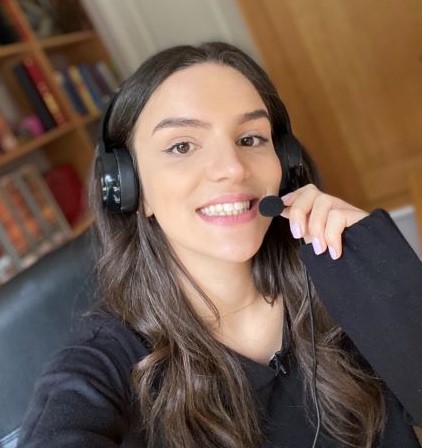 Last week on Sharp Scratch we attempted to unravel discussions effectually health anxiety, and to improve understand the pattern of how this is associated with medical students in particular.
Staring down at a long checklist of symptoms, information technology can be quite piece of cake to match yourself to a disease. "Wait . . . I bruise easily? Fatigue . . . now I think almost it, I am rather tired? I also bleed quite heavily? Do I have Von Willebrand disease?" Mayhap the cause of my bruises was simply because I can be clumsy, only I was definitely quite convinced of my self-diagnosis for a cursory period of fourth dimension, which was not helped by the fact that I learnt about this disease through a case based discussion about a scenario where "a 20 yr old female medical student had suffered from episodes of fainting" — just equally I had a few weeks prior.
Upon discussing this with the other Sharp Scratch panel members, nosotros soon noted that I was not solitary, equally between us we had too feared subarachnoid haemorrhages, wonky eyes, asthma, and umbilical hernias—though some of us turned out to have been correct with our suspicions. Sometimes y'all have a bit of insight and empathise you might be being "dramatic," and whenever anyone at my medical schoolhouse has ever spoken almost this information technology is ever in a jokey way, with the underlying bulletin always being that "y'all don't have the affliction you retrieve you lot do, and the act of studying a status doesn't make it more than likely." B ut then, equally panel member Olukayode Oki said, "how do you lot aid people feel heard and not dismissed, in instance they have this actually obscure condition?"
Our practiced guest, Professor Sir Simon Wessely, helped us unpack why individuals frequently experience health anxieties and self diagnose in the showtime place; and so in turn why medical students may be more likely to do this. He stated that "anxiety itself is incredibly common, and if you do get anxious or depressed, the number of physical symptoms become up. You go somatic symptoms which have a very expert physiological cause. Your centre beats faster, yous sweat more than, you get abdominal pain, you become headaches." He then went on to explain that while we can attribute these symptoms to stress, this is not the kickoff conclusion we jump to, and "most people's commencement attribution is to retrieve I take a physical affliction," which may be beneficial from an evolutionary perspective.
Simon stressed that it is "very difficult to separate out concrete and psychological disorders, if ever such a division is possible," simply that our "first duty is to make sure that common things such as anemia are ruled out." He told the panel that somatisation is the most usual way for common mental disorders to present, and that it is "unusual to psychologise mutual somatic symptoms, though this has been irresolute in recent years as awareness of mental illness has inverse and the stigma reduced."
As part of this episode, we had an interview with Gavin Ball, a medical pupil at the University of Manchester, who had found abnormalities in his ECG during a medical student applied in his tertiary year. This led to further investigations, a diagnosis of arrhythmogenic right ventricular cardiomyopathy (meaning he was predisposed to life threatening arrhythmias). He had an implantable cardioverter defibrillator, before suffering from a deep vein thrombosis that required surgery and medication to treat. This sparked some interesting panel discussion nigh screening healthy individuals, with Simon pointing usa to a quote from Gray, "All screening programmes do harm; some practice adept as well, and, of these, some practise more expert than harm at reasonable toll." As in Gavin'due south example, a seemingly fit and healthy medical educatee was "screened" through a simple ECG, and the interventions may accept helped him, but they too ended upwards harming him.
A concept we tend to talk over a lot on Sharp Scratch is the "culture" of being a medical student, and how this plays a role in our professional identity. 1 of the reasons we believe this set culture may have come about is because of how "medical students are a self-selected group of people" (Anna Harvey), meaning there are more of certain personality types, who build up the environs you lot meet at medical school.
Simon mentioned that medical students "are not allowed" to mental health disorders, but in fact our console thought that perhaps our personalities could mean we are fifty-fifty more vulnerable. Oft we see medical schools interviewing candidates in order to positively select for certain grapheme traits that we associate with existence a "good doctor," such every bit resilience, but this can mean students put too much pressure on themselves to cope, and it can exist hard for these aforementioned individuals to seek assist when they are struggling. The high pressure environment that yous are in at medical schoolhouse tin can too affect your mental health, so "there is no surprise that anxiety specifically effectually health would besides be more than common in that cohort of people" (Anna).
Our console wondered if "some people'southward personalities are more likely to ruminate," and when studying for your medical degree you are exposed to more information and "you have more of an awareness of sinister organic causes of symptoms," which may be why nosotros are prone to medical student syndrome. We laughed as we recalled the proverb "a little noesis Is a dangerous thing," which may exist true for medical students disarming themselves they have adult the latest illness they studied.
So what is medical pupil syndrome? From our discussions, it seems that health anxieties and exposure to information (that may not always be consummate) are major contributing factors. As e'er, insight into this gives u.s. improve control over these emotions and a more balanced judgment about our own health. Information technology tin exist difficult to be neutral when you're the bailiwick of question. You can't actually view your ain symptoms or history from an unbiased point of view like a physician is supposed to. Our takeaway message from this episode was to exist vigilant if you exercise notice things about yourself, especially if your friends or tutors are picking them up as well.
Nikki Nabavi, editorial scholar, The BMJ.
The Sharp Scratch Console:
Nikki Nabavi, The BMJ, University of Manchester
Anna Harvey, Rex's College London
Olukayode Oki, Academy of Dundee
Medical student syndrome episode guests:
Simon Wessely, regius professor of psychiatry, Male monarch's Higher London
Gavin Brawl, University of Manchester
Listen to the episode on Spotify and Apple pods.
Follow us on Twitter:
Console: @nikkixnabavi @teekayoki @a_c_harvey
Guests: @WesselyS
Brought to you by: @bmj_latest @BMJStudent
Sponsored past: @MPS_Medical
Source: https://blogs.bmj.com/bmj/2020/10/20/nikki-nabavi-medical-student-syndrome/
0 Response to "When Medical Students Read Symptoms and Think They Have Them"
Post a Comment